Emotion Detective School - An Interactive Elementary Health Teaching Activity
Students loved this interactive emotion lesson plan. In the Emotions Detective School learning activity, students become expert emotion detectives as they learn how to identify emotions in themselves and others. They explore the purpose of different emotions, search for body, word, and situation clues, and practice healthy ways to express big feelings. Students were engaged and got to move around all while building critical emotional skills.
Table of Contents
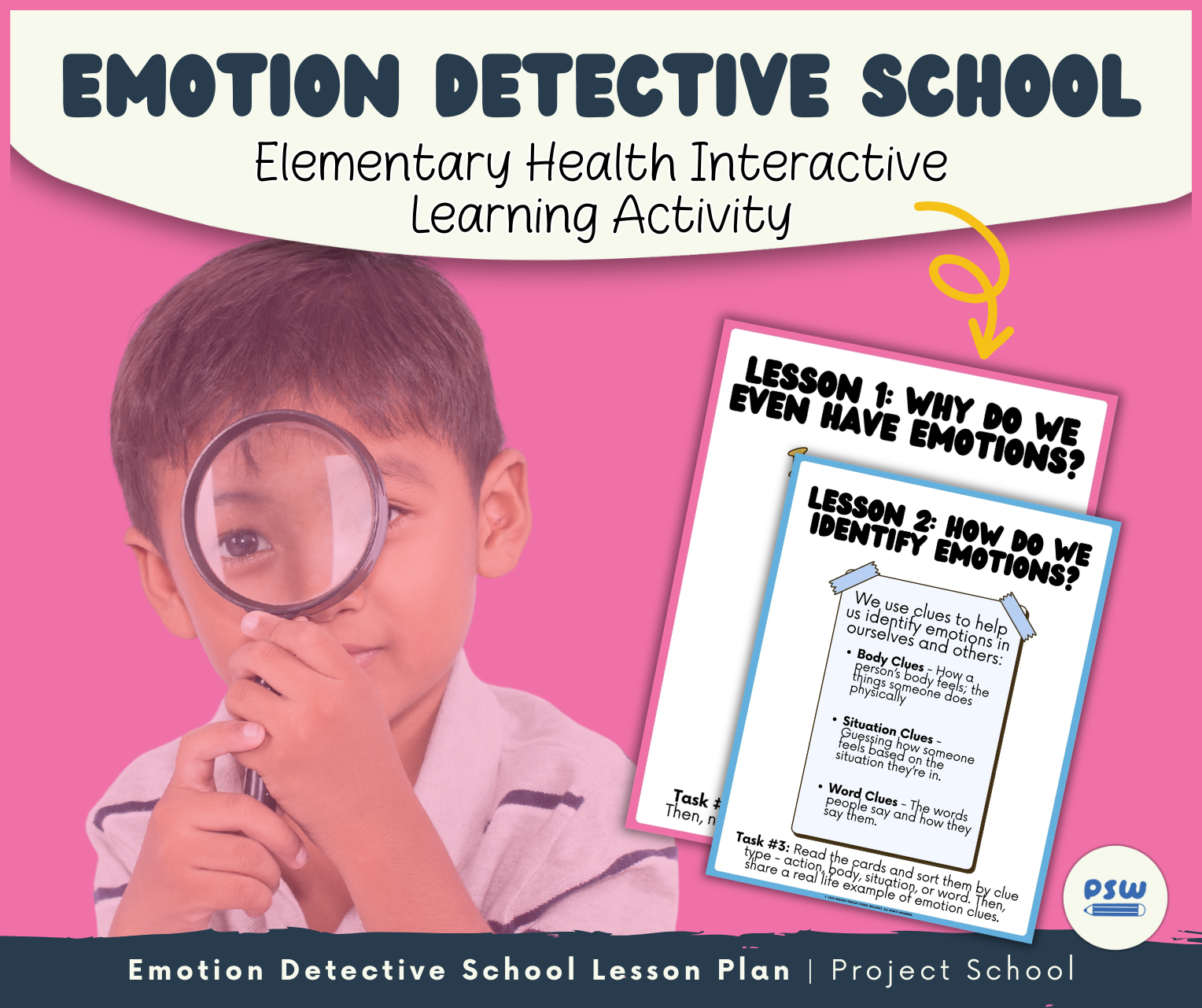
An Activity to Introduce Students to Emotions (And the Included Stations)
The goal of the Emotion Detective School is to introduce students to the purpose of emotions, the clues we can use to identify emotions in ourselves and others, and strategies for expressing emotions. This is an interactive learning experience where students become “emotion detectives.” Students start by learning the purpose of different emotions, then explore the clues that help them identify emotions in themselves and others. Finally, they learn to express emotions in helpful and healthy ways. This activity helps students build the skills to recognize and respond to emotions thoughtfully.
👉 Teacher Hack: Start by using a balloon to teach the concept of BIG emotions.
Here’s a look at the included lessons (aka learning stations):
Interactive Lesson 1: The purpose of emotions and what emotions do for us
Interactive Lesson 2: How to identify emotions using body, word, and situation clues
Interactive Lesson 3: Helpful ways to express emotions and let them out safely (i.e. emotionally regulate)

How to Set Up the Emotion Detective School Activity
Here’s how you set up the Emotion Detective School activity. For this elementary health learning experience, instead of setting up three different physical stations, I made an Emotion Detective School packet for each group (one set for every 3-4 students). Then, students worked through the “lessons” with their partners at their own pace.
This is how you make an “Emotion Detective School” packet:
Print the posters and teaching materials (pages 3-14). Put each “lesson” in a plastic protector or folder.
Print one “Let It Out” box for each student (page 15).
Then, prep the teaching materials and put them in a bag or in the back of the plastic protector:
Page 4 - Cut out the badges.
Pages 6-9 - Cut out the sorting cards.
Page 12-13 - Cut out the emotion examples.
Page 15 - Does not need to be cut.
Once this is all done, you’re ready to use the Emotion Detective School with your elementary health students!
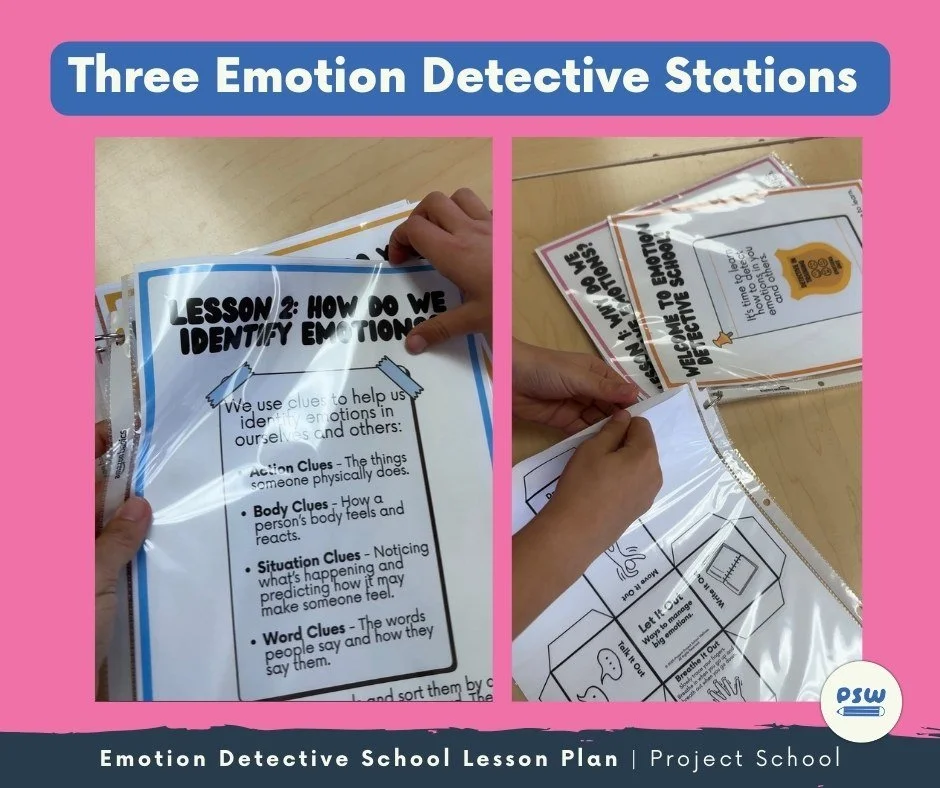
Student Directions
Here’s how you can use the Emotion Detective School in your health class:
Divide students into groups and give each one an activity packet.
Explain how to complete each lesson task.
You can have students work at their own pace or direct the class as a whole.
Next up, the class debrief.

Debrief and Reflection
After students have completed each “lesson,” debrief as a class. Review what the purpose of each emotion is, how the clues work to inform us, and the “Let It Out” strategies. Here are a few reflection prompts:
Name some emotions you’ve felt today.
What are some emotional clues you’ve seen in real life?
Which of the “Let It Out” strategies do you like best?
The detective angle engaged students in the mission of understanding emotions, the clues made identification concrete, and the “Let It Out” strategies gave us shared language for tough moments. This lesson gave me usable language the very same day. Students were naming emotions, citing clues, and choosing strategies without me prompting. That’s a win.