Five Emotional Regulation Strategies for Health Class (ft. Interactive Learning Stations)
Teach students how to regulate their emotions with a balloon and five learning stations. The balloon gives students a great visual to understand big emotions, and the stations give them an opportunity to practice practical emotional regulation strategies. Let's explore how it works.
Table of Contents
Emotions are Like a Balloon
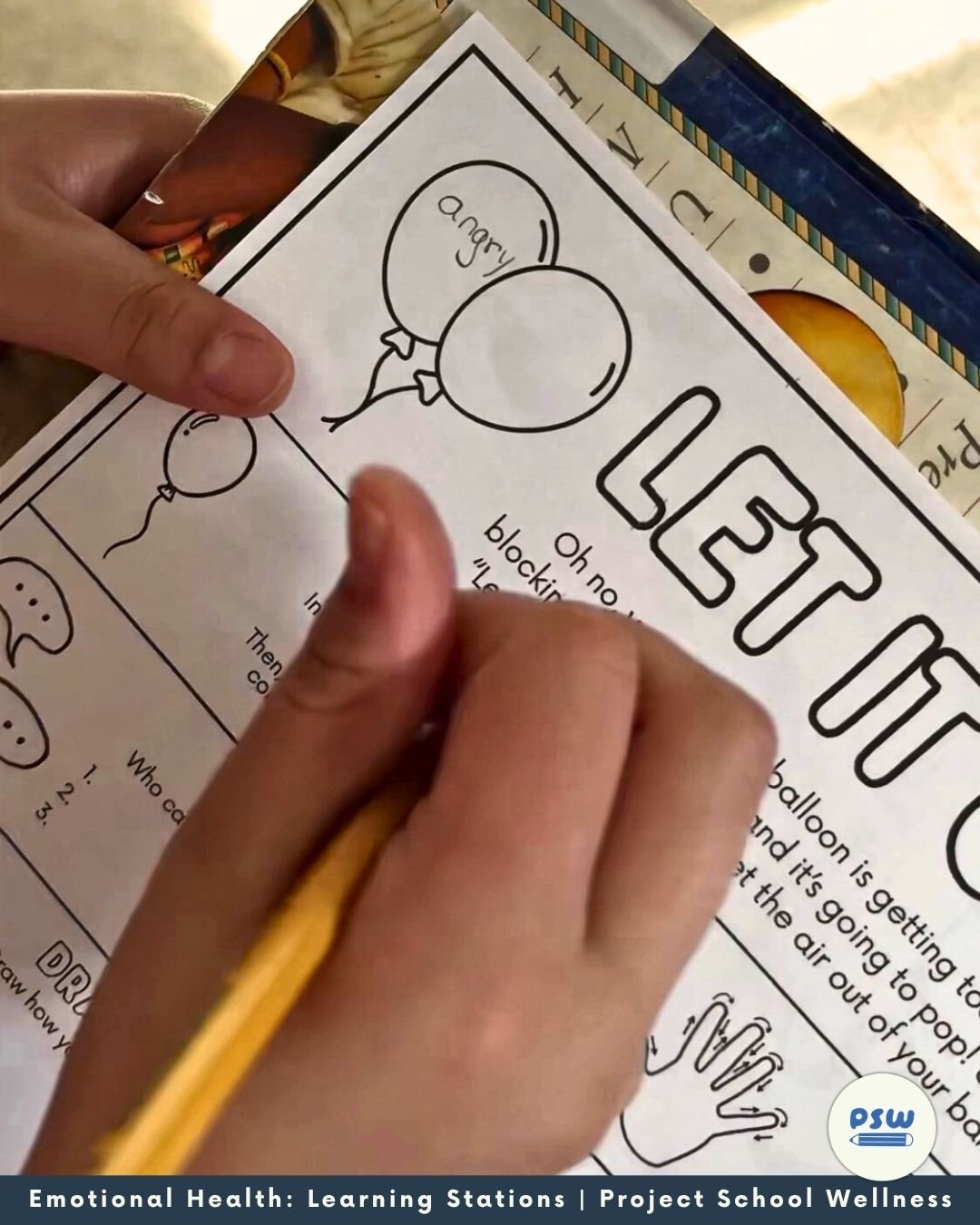
Before jumping into the stations, I started by using a balloon to explain the concept of having big feelings. I blew the balloon up slowly and explained that the balloon represents an emotion growing bigger and bigger inside of us. When feelings get too big, they can take over. That's when we see behaviors like yelling, saying unkind words, or slamming doors.
Then, I made the connection: Just like we can let air out of a balloon so it doesn’t pop, we can learn ways to let big feelings out. That imagery clicked for students immediately. It also gave them a shared language to use while exploring the stations.
This video shows exactly how I use the balloon to teach students about big feelings.
Five Emotional Regulation Strategies
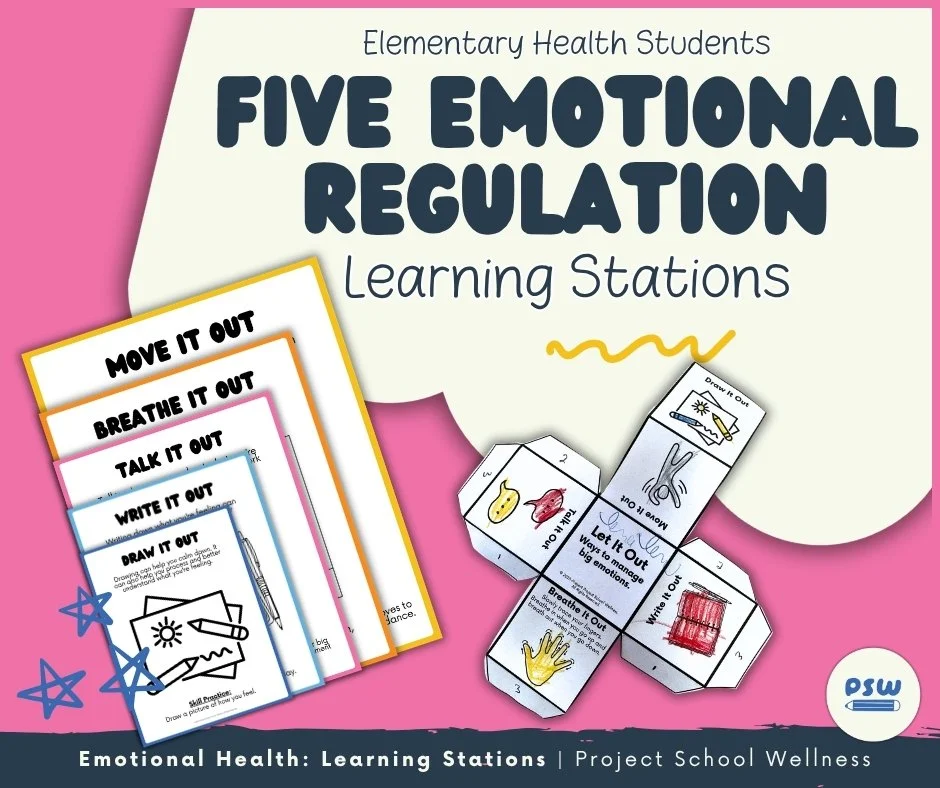
Each Let It Out learning station introduces students to one of these five strategies for managing big emotions (aka emotional regulation). Here's a quick look at each one:
Draw It Out: Express feelings through drawing or doodling; using drawing/coloring as a way to calm down.
Move It Out: Use movement and dance to release built-up energy and/or release endorphins; moving your body as tool to help process a sitaution.
Talk It Out: Share what you're feeling with someone you trust; connecting with someone you trust to help you cool off.
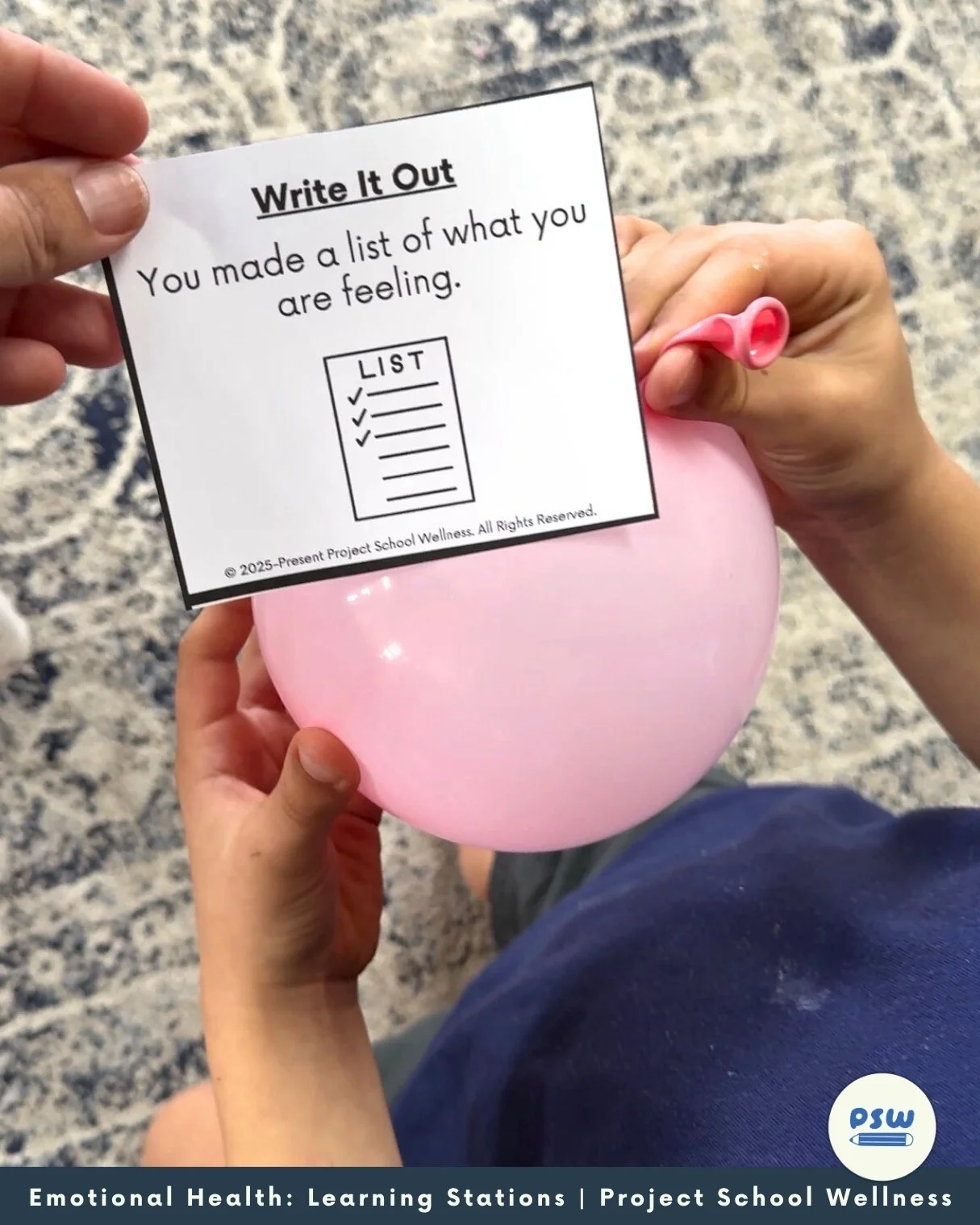
Write It Out: Make a list or write about what you're feeling; journal about what’s going on.
Breathe It Out: Use breathing techniques (like Finger Breathing or Lazy 8s) to calm your body.
Each strategy gives students a concrete, helpful way to express emotions, and having five options means students can find the one (or three) that works best for them!
How to Set Up the Learning Stations
Setting up the Let It Out learning stations is pretty straightforward. Here's what you'll want to prep ahead of time:
Print the station posters and activity materials.
Cut out the "Move It Out" dance move cards.
Cut out the "Talk It Out" discussion prompt cards.
Get bubbles for the "Breathe It Out" station.
Print one student activity sheet per student.
Optional Bonus Let It Out Dice: Print one "Let It Out Dice" craft for each student.
Optional Bonus Balloon Game: Print and cut the "Let It Out Balloon Game" cards. You will also need a balloon for each student.
Activity Directions
Once students have been introduced to the balloon concept and the five strategies, they're ready to rotate through the stations.
Here's how to run the activity:
Hand out a student worksheet to each student.
Briefly walk through what happens at each station.
Divide students into small groups and assign each group a starting station.
Students can work at their own pace, or you can manage when they rotate.
Once they’ve completed each station, it’s time to debrief as a class.
That's it! The activity runs itself from there.
Directions for the BONUS Emotional Regulation Activities
If you want to do more than just the learning centres, here are some bonus activity options:
Optional - Let It Out Dice: Students design and create the dice. Then, they can use it as a reminder of the different emotional regulation tools they can use.
Optional - Balloon Game: This activity helps students visualize how the “Let It Out” techniques can help them lessen the pressure of big feelings (a.k.a. let air
out of the balloon).
Here’s how it works:
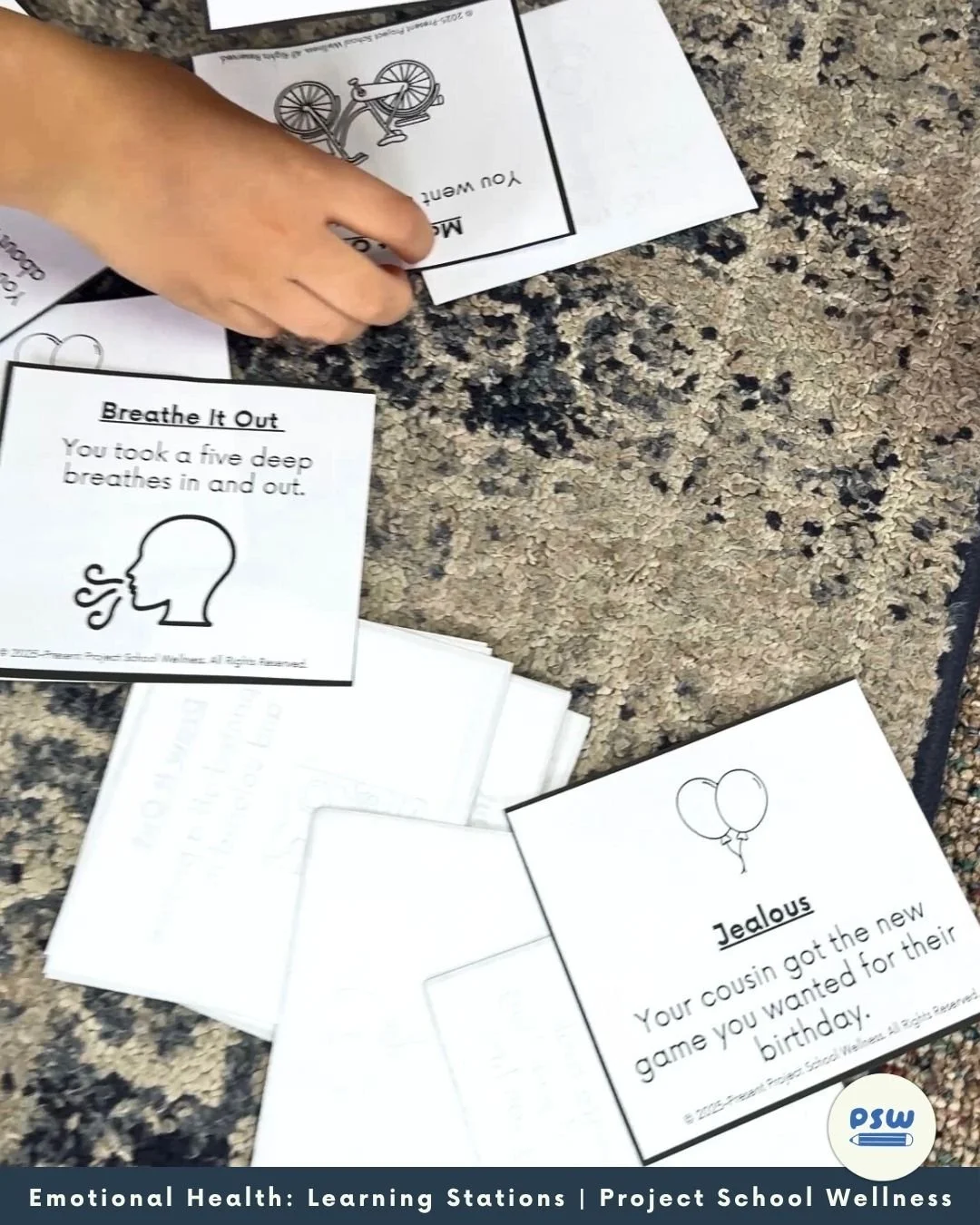
Divide students into pairs and put the pile of cards face down in the middle of the classroom.
For the first round, Student A needs a balloon.
When you say go, Student B (without a balloon) will grab a card. If the card has an emotion on it, Student A blows up their balloon. If it has a “Let It Out” technique, they release air from their balloon.
You can have them go a set number of times or set a timer.
Then get Student B a balloon and have them switch roles.
Debrief and Reflection
After students complete all five stations, bring the class back together to debrief. Review each of the "Let It Out" strategies and use these prompts to guide the conversation:
Which "Let It Out" technique have you already used before?
Which strategy do you like best?
Which one feels the hardest for you?
This is where the real learning happens. Students start to connect the strategies to their own lives, and you'll hear them use the language on their own by the end of the day. That's always the goal.