Museum of Advocacy and Influence - How to Teach the Three Types of Advocacy and Analyzing Influences
This museum-style lesson plan was a massive success! It helped break down the three types of advocacy (self-advocacy, individual advocacy, and systems advocacy) so that students could actually understand the difference and gave students a chance to better understand the skill of analyzing influences(i.e., learning how influences affect how we feel, think, and act). Along with being a thoughtful exploration of these two health skills, it was also a fun and interactive way to review key body care elements (body image, hygiene, nutrition, physical activity, safety, and sleep).
Table of Contents
Review: The Skills of Advocacy and Influence
What is the Museum of Advocacy and Influence?
What are the three types of advocacy?
What is the health skill of analzying influences?

Review: The Skills of Advocacy and Influence
Before we dive into the Museum of Advocacy and Influence learning station activity, let’s do a quick review of the health skills of Advocacy (SHAPE Standard #8) and Influence (SHAPE Standard #2). They are two of the eight health skills outlined in SHAPE America’s National Health Education Standards.
Advocacy is all about speaking up for your health and the health of others.
Standard #8 - “Advocate to promote health and well-being of self and others.”
Analyzing Influences is all about being able to identify who and what is impacting your health and being able to intentionally navigate influences.
Standard #2 - “Analyze influences that affect health and well-being of self and others.”’’
These are two connected but very different skills. Recently, I was teaching about advocacy and realized how easily students were mixing up the two skills. After our first advocacy lesson, students were confused on what exactly influencers were and struggling to grasp the difference between the three types of advaocy - self, indvidiual, and systems. So I went back to the lesson plan drawing board and created this museum style health learning station activity.
What is the Museum of Advocacy and Influence?
So what exactly is the Museum of Advocacy and Influence learning station activity? You can think of it as a mini health class museum with exhibits and artifacts. Each “exhibit” features real-world “artifacts” that students analyze to understand how advocacy and influence shape healthy habits and everyday decisions related to physical health.
Exhibits highlighted one of the six body care elements we’ve been exploring in class - body image, hygiene, nutrition, physical activity, safety, and sleep.
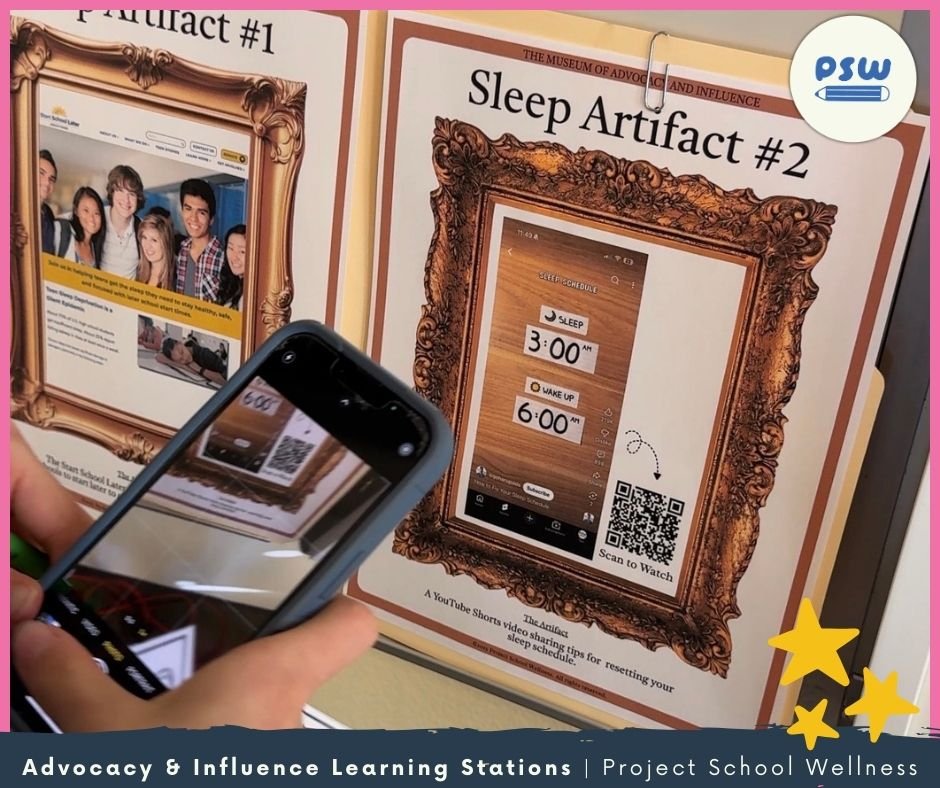
Artifacts were genuine examples of advocacy and influence connected to each exhibit.
Along with the exhibits and their artifacts, each student had a “Gallery Walk” worksheet. This worksheet guided their museum exploration as they identified what exactly the influence was trying to get you to feel, think, or do, and which type of advocacy was being represented:
Self-Advocacy - Speaking up for yourself and your needs, wants, desires, and rights.
Individual Advocacy - Speaking up for others at an individual level. This can be informal (i.e. standing up for your friends) or formal (i.e. using a formal system to advocate for an individual).
Systems Advocacy - Changing policy, laws, rules, and practices within a system.
Advocacy and influence can feel abstract for students. This interactive activity makes these concepts concrete by allowing students to interact with visual examples and real life scenarios.
How to Set Up the Advocacy Learning Stations
Now that we’ve explored what the Museum of Advocacy and Influence is, let’s take a look at how you can set it up for your health class.
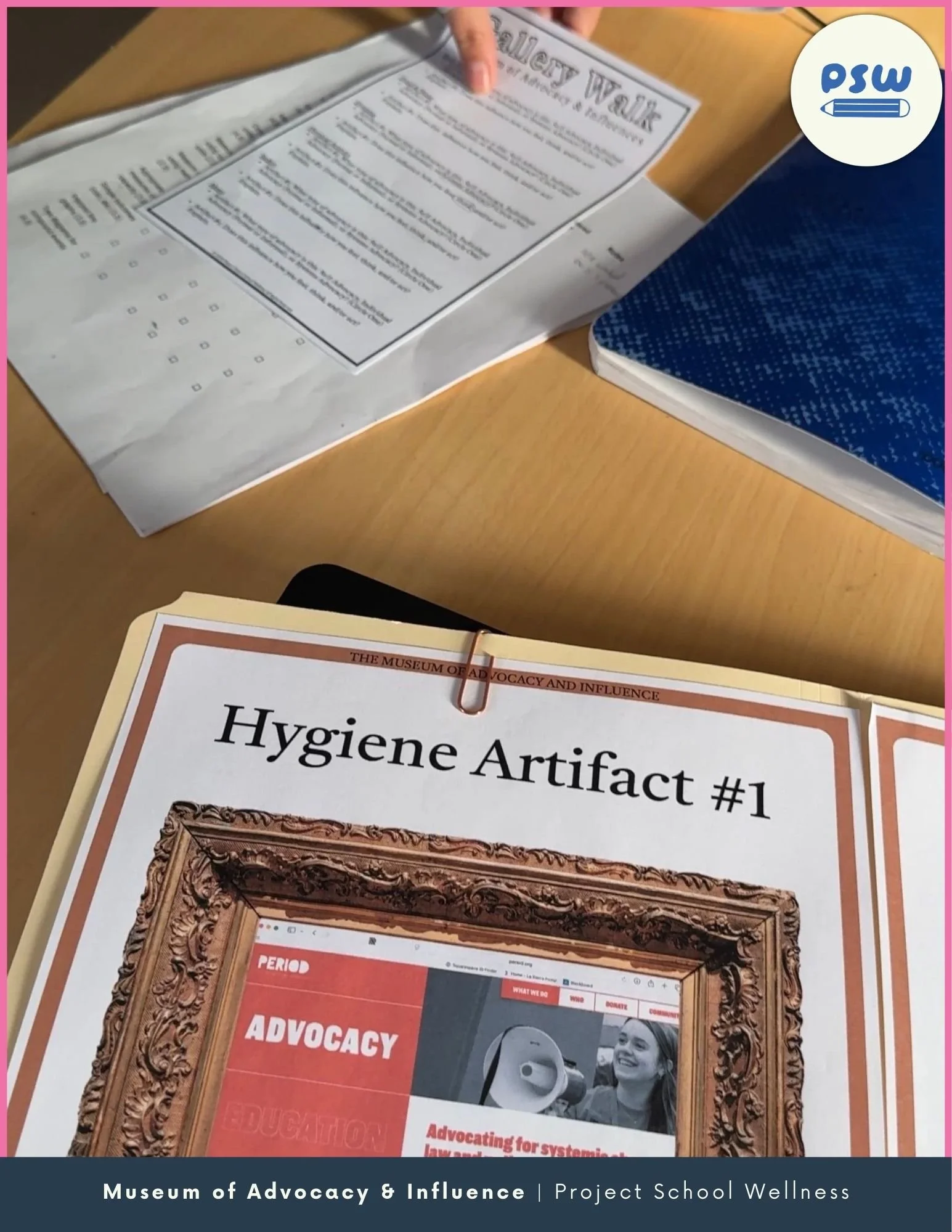
Print the museum artifacts. Then, put corresponding artifacts (one advocacy and one influence) in a manila folder to be displayed as an “exhibit”. Here’s a list of the exhibits:
Exhibit #1: Body Image
Exhibit #2: Food & Water (Nutrition)
Exhibit #3: Hygiene
Exhibit #4: Physical Activity
Exhibit #5: Safety
Exhibit #6: Sleep
Print the gallery walk worksheets. Each student needs one.
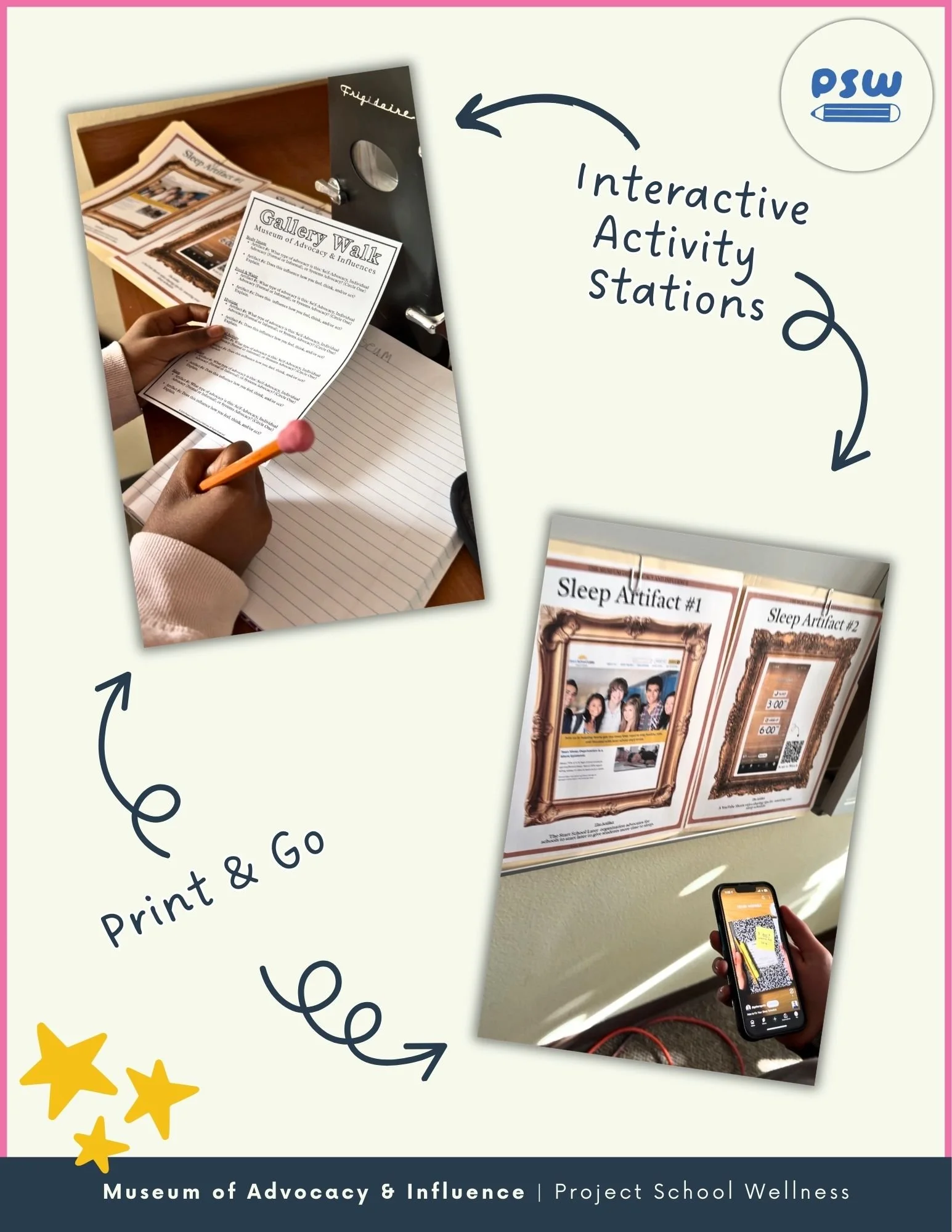
Place museum exhibits around the classroom.
Activity Directions
Now that it’s all set up, it’s time to lead the activity! Start by reviewing the concepts of advocacy and influence. Along with reviewing these concepts, refresh students on the six body care elements: body image, food and water, hygiene, physical activity, safety, and sleep. After reviewing the core concepts, students are ready to explore the “exhibits.” Here’s how the activity works:
Pass out a gallery walk worksheet to each student.
Then, divide students into small groups and assign them an “exhibit” to start at. (It doesn’t matter which exhibit students start at, by the end they will have reviewed each one.)
At each “exhibit,” students will use the gallery walk prompts to review the advocacy and influence artifact. The goal is for them to be able to identify the type of advocacy and what the influence is encouraging viewers to feel, think, or do (act).
Repeat until they’ve reviewed each exhibit.
Debrief and Reflection
Once they’ve explored the museum, debrief as a class. Take time to review the gallery walk worksheet, recapping the different types of advocacy represented and how the different influences change how people feel, think, and act.
Along with the debrief, here are some reflection prompts for students to discuss:
Where have you seen advocacy (self, individual, and/or systems) in your real life?
How have you influenced the ways someone feels, thinks, and/or acts?
Who/what are some of the influences in your and your peers’ lives?
Overall, my students thoroughly enjoyed this activity! The museum vibe made advocacy and influence feel real, and students walked out actually using the language in context. Easy to set up, easy to reuse, and perfect for health, advisory, or a cross-curricular media literacy day. I will definitely use this lesson and make more like it in the future!