
The Mental Health Bucket - The #1 Tool for Teaching Mental Health
The Mental Health Bucket is my go-to tool for teaching mental health. It's unreal how fast my health students go from not understanding what mental health is to being able to analyze their own mental health. That's the power of the Mental Health Bucket; it makes the abstract concept of mental health concrete.
Table of Contents
What is the Mental Health Bucket?
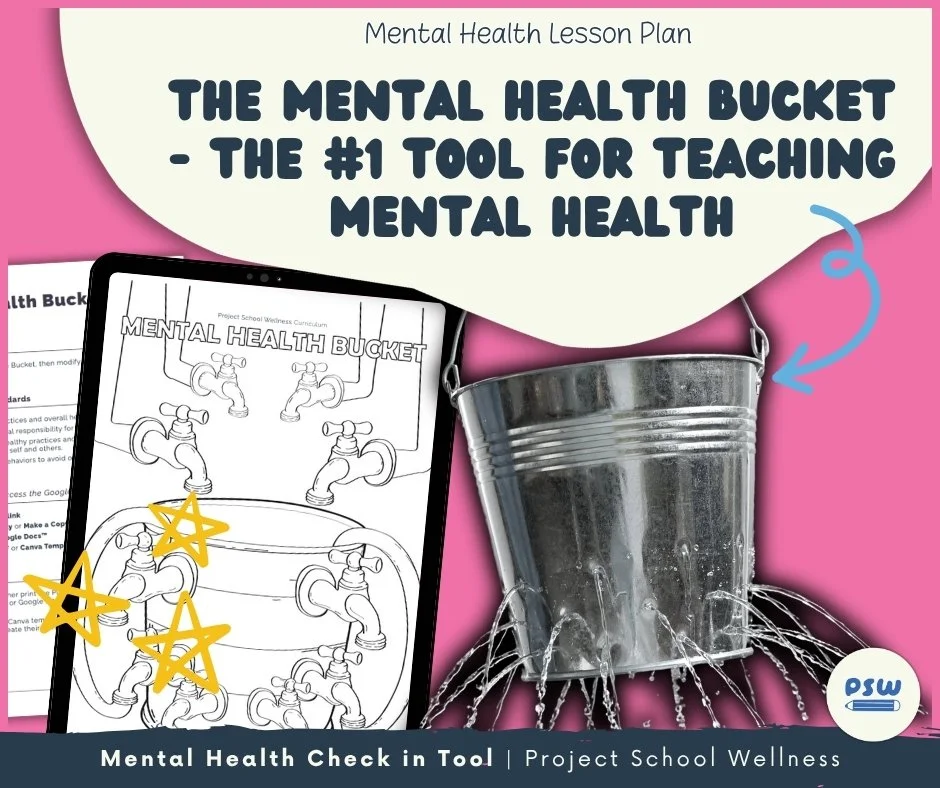
The Mental Health Bucket is a visual representation of a person’s mental health (aka their capacity to cope with and manage the demands of life). Each aspect of the visual signifies the various aspects of a person’s mental health.
Here’s a breakdown of the Mental Health Bucket:
The Bucket - Mental health - their overall capacity to manage their life.
The Faucets & Water - The water coming into our buckets represents our demands (i.e., our responsibilities, the challenges in our life, expectations others have of us/we have of ourselves, etc.). The water is NOT an indicator of stress.
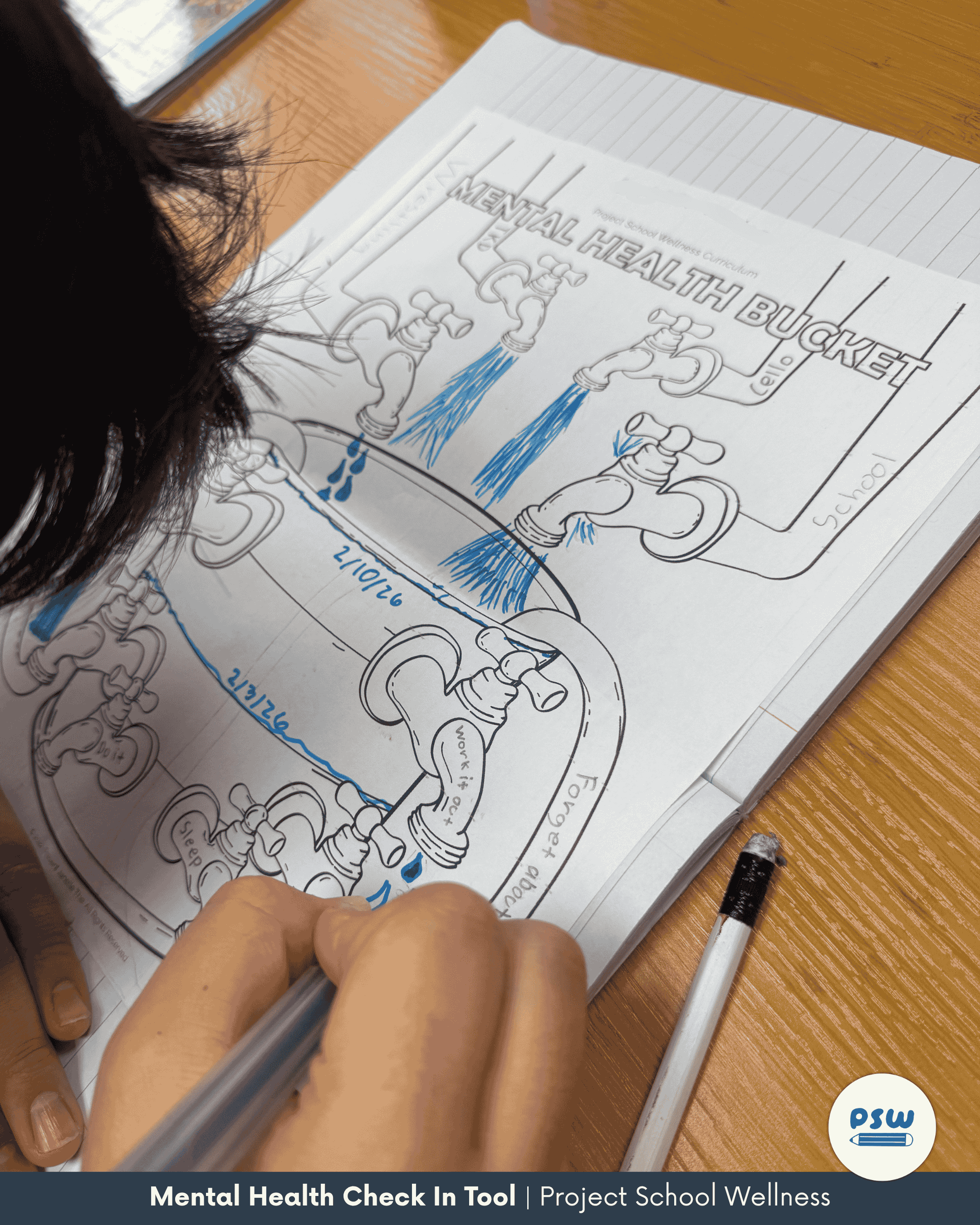
Water Lines - These lines help us understand how we are feeling in relation to our water levels. When it's at the bottom, we are relaxed (i.e. on a beach vacation); when it's towards the middle, we are coping well (i.e. stuff's going on but you've got it handled); as it gets close to the top, we are in distress (i.e. things don't feel so handled); when the water starts to overflow, we are not managing.
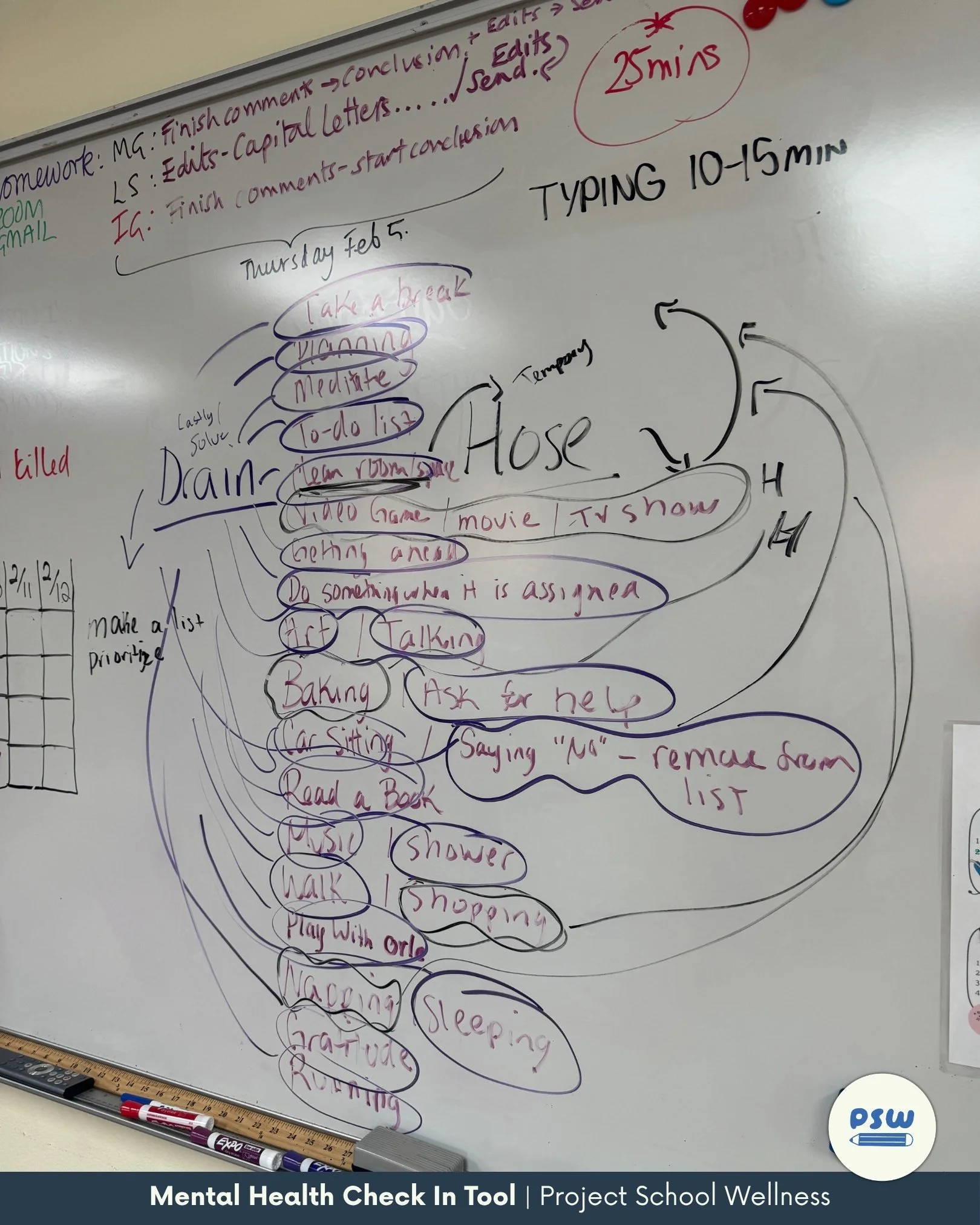
Drains - Strategies that sustainably lower the water levels in your Mental Health Bucket. (i.e., writing out a to-do list and agenda right when you get home from school)
Hoses - Strategies that temporarily lower the water levels in your Mental Health Bucket but then ultimately fill your bucket up again. (i.e., playing video games for a few hours to de-stress and then forgetting to do your homework before bed)
As I share each piece of the visual with students, I like to share examples from my own life.
Two Types of Coping Mechanisms
Before moving on to how I use this with students, let's chat about two key types of coping mechanisms. It wasn't until the most recent time I taught this model that I realized I needed to expand on how I teach coping mechanisms. When it comes to teaching coping mechanisms, there are two different types to explore:
Emotional Regulation Skills that address how a person is FEELING in relation to their mental health (i.e., stressed, overwhelmed, lonely, incompetent, etc.).
Life Management Skills that address how a person is able to manage the demands that are filling up their bucket (i.e., asking for help, saying no, writing out a to-do list and agenda, etc.).
It was a real lightbulb moment for me when I realized the difference between the two. Thankfully, they had just done the Let It Out emotional regulation stations and were able to easily make the connection.
How to Use the Mental Health Bucket in Health Class
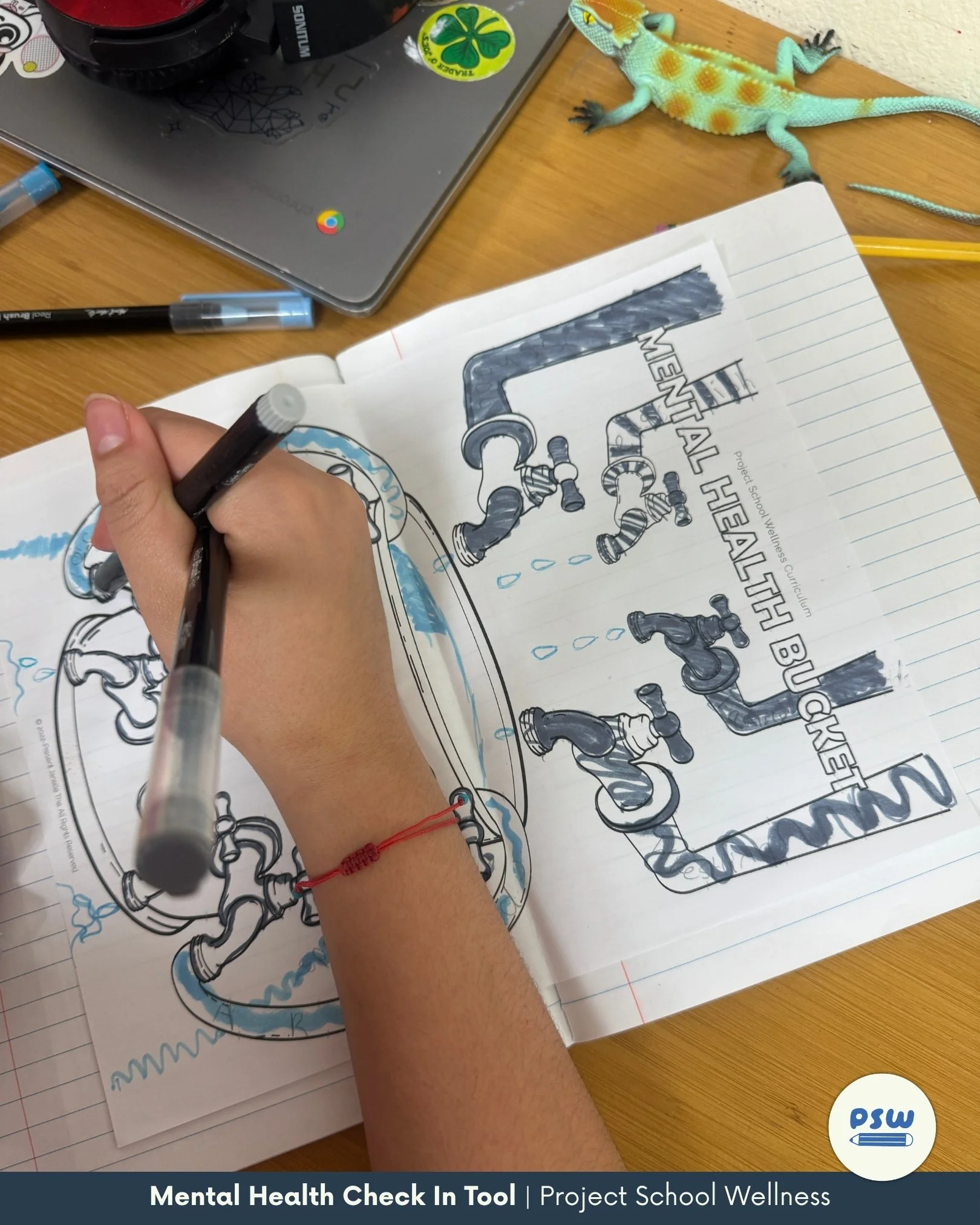
After reviewing the Mental Health Bucket visual with students, it's time for them to start exploring. I pass out a blank Mental Health Bucket to each student and then ask them to personalize it:
Bucket Size & Stress Lines - Do you have a large, average, or less-than-average capacity for managing your life? How much stress can you manage before feeling distressed and overwhelmed?
Task: Label your stress lines (i.e., Relaxed, Coping Well, In Distress, Not Managing)
Faucets & Water Droplets - What are the primary sources of demand in your life? (i.e., stressful home life, work and school, extracurricular clubs/sports, friendships, dating relationships, etc)? Are they slow drips, full-force streams of water, or a steady drop?
Task: Explain what each faucet pouring water into your bucket represents and draw water drops and/or streams of water to indicate how much is flowing in.
Drain - How do you productively manage stress? (i.e., sleeping 8+, asking for help, saying no, and setting up boundaries, etc.)
Task: Explain what each faucet draining water out of your bucket represents and draw water drops and/or streams of water to indicate how much is flowing out.
Hose - How do you temporarily relieve stress (before the strategy begins to refill your bucket? (i.e., drinking alcohol to dull your emotions, binge-watching TV, avoiding responsibilities, etc.)
Task: Explain what each faucet and hose temporarily draining water out of your bucket represents.
A Quick Mental Health Check-In
Not only do I love the Mental Health Bucket for so clearly breaking down the abstract idea of mental health into concrete pieces (the bucket, water lines, faucets, drains, hoses). But it is also because it gives students (and me) such a clear and concise way to check in with their mental health.
You can keep it simple with a quick water line check. Or you can ask them to identify what's filling up their buckets and/or what they are doing to manage their water levels.
There are lots of options on how you can use the Mental Health Bucket! Once you start using it, it's amazing to see how fast students build self-awareness!