Mental Health First Aid Kit - Summative Health Project
Looking for a summative health project that is not only fun but also actually helps students improve their mental health? Look no further than the Mental Health First Aid Kit. It checks all the boxes: it showcases students’ knowledge of mental health, assesses their ability to apply SHAPE America health skills, and serves as a practical tool they can use in the future. It’s a win-win-win.
Table of Contents

Why a Mental Health First Aid Kit?
The Mental Health First Aid Kit may be my favorite summative health project ever! When I assigned it, my #1 priority was for students to create a practical and relevant tool that they could actually use in real life. I didn't want it to be another cute project they enjoyed making, but that ultimately didn't translate into actual health habits being formed.
What is a Mental Health First Aid Kit?
So what exactly is a Mental Health First Aid Kit? Like a general first aid kit, a mental health first aid kit, is a personalized collection of resources and supplies used to help manage a person’s mental health. This personalized first aid kit can include things like an index of accessible resources and services, reminders of mental health red flags, a list of enriching coping mechanism, and more useful tools for managing mental health. Whatever will help them out.
Health Project Guidelines: What to Put Into the Mental Health First Aid Kit?
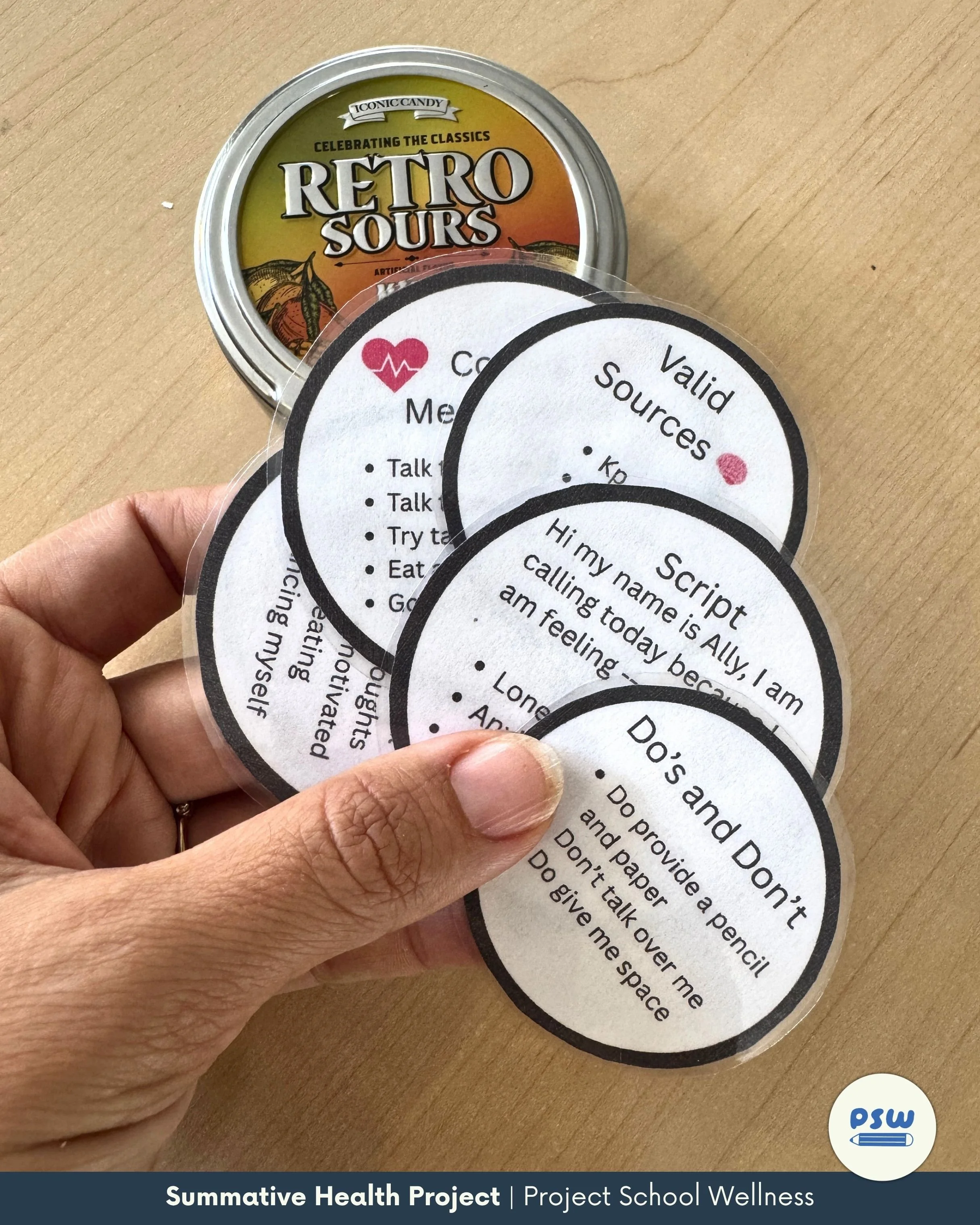
This is a bit of a choose-your-adventure style activity, meaning students had creative control of what type of first aid kit they wanted to make. The only criteria was that it had to be something they could actually keep handy (in their binder, phone, backpack, locker, etc.).
Here's a breakdown of what each project needed to include:
Red Flags - Personalized mental health red flags (a.k.a. signs that their mental health bucket is filling up with too much water).
Coping Mechanisms - Personalized coping mechanisms to both slow the flow of water into and drain the water out of their mental health bucket.
Valid Sources- A list of valid sources they can go to access mental health information.
Valid Service Providers - A list of valid service providers they can reach out to for support.
Add a script you can follow when you are reaching out to people for support.
How People Can Help- Dos and Don’ts for how you want people to support and help you when you’re not okay.
As part of the assignment, they were given discovery prompts to help them decide what to put in it.
Student Examples
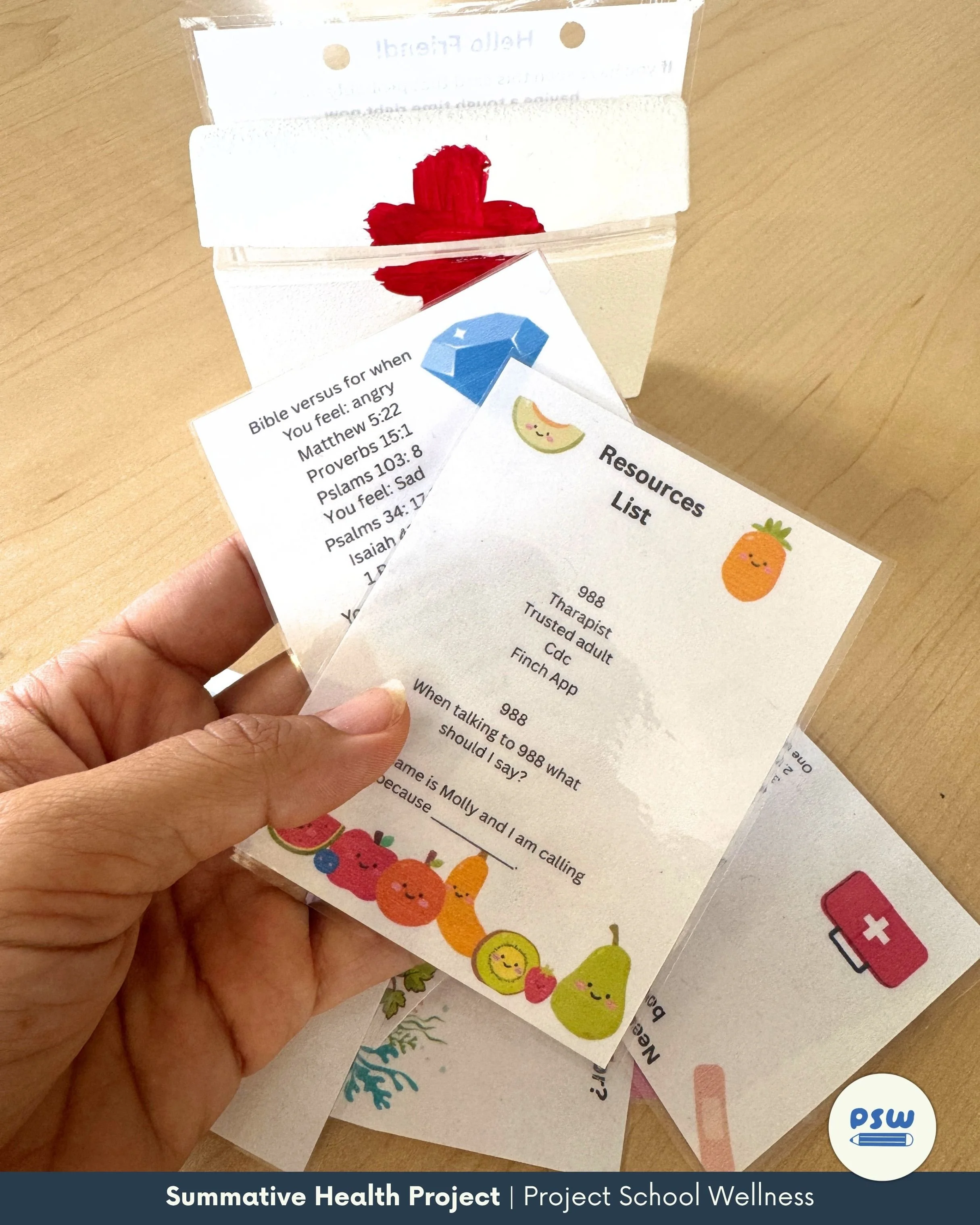
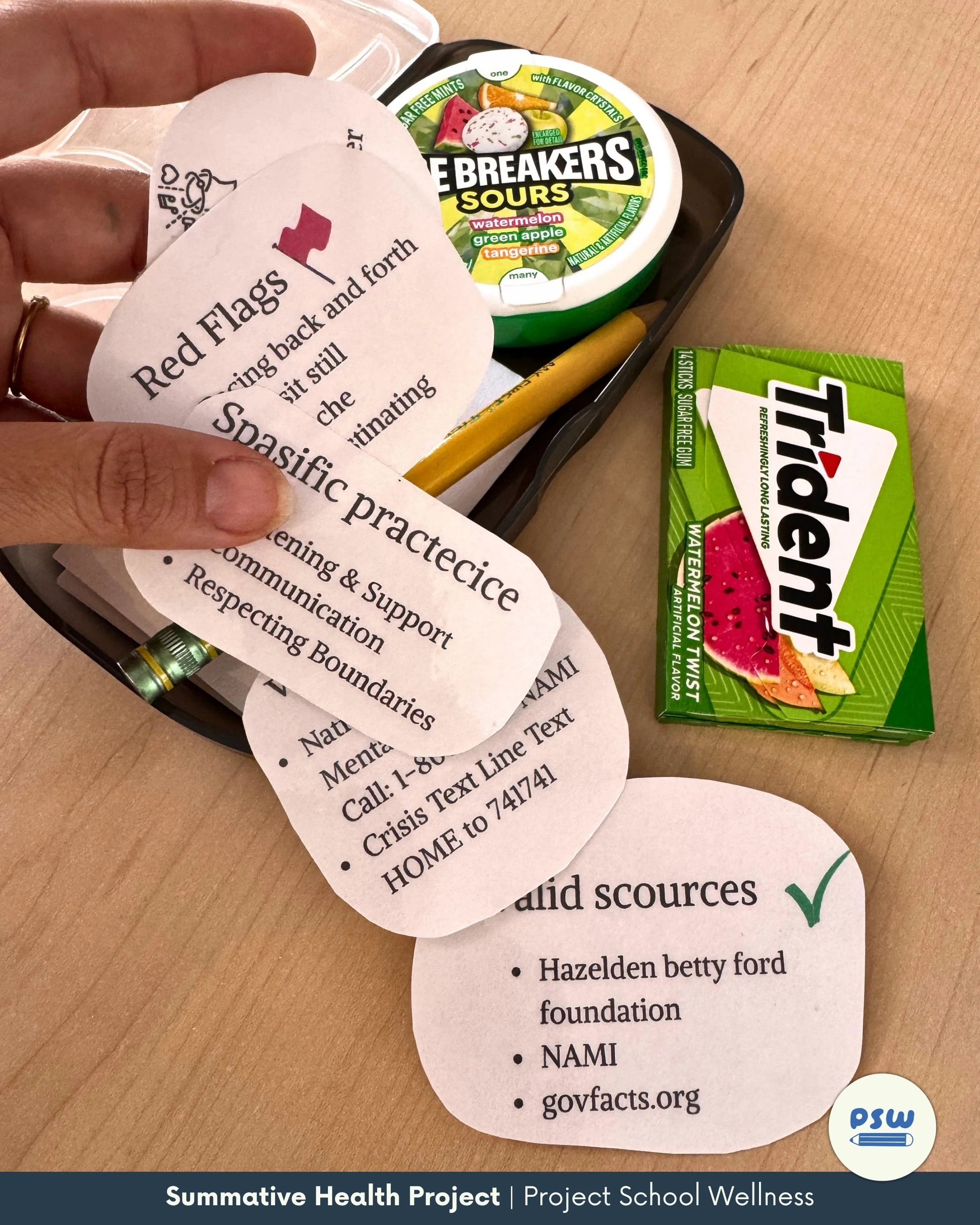
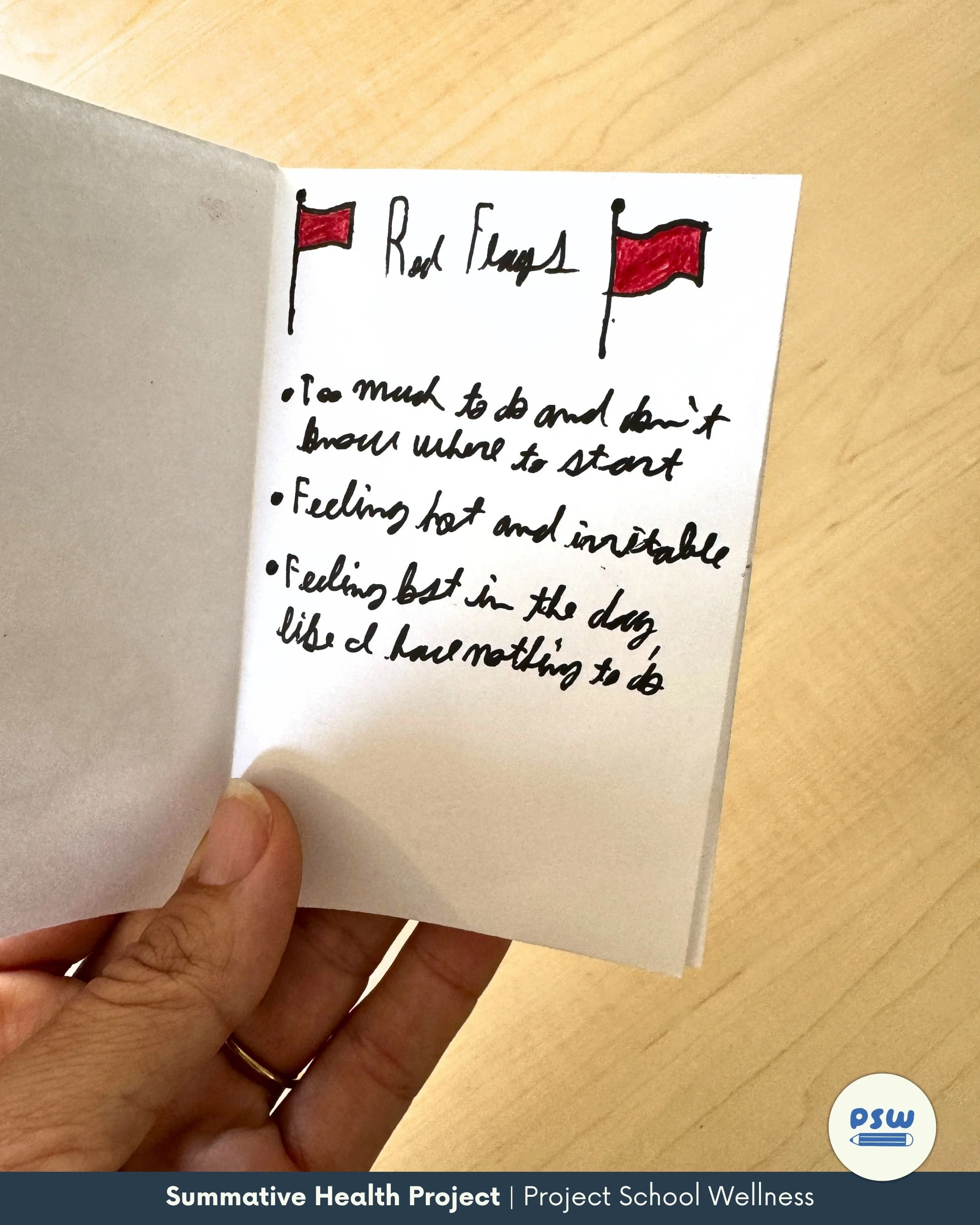
I've been so impressed with what my students created! They were able to identify personal red flags, coping mechanisms that work for them, sources and service providers that they can read out to, and a guide for how people can help them.
Teacher Note: I reminded students multiple times that, first and foremost, this is a health management tool for them. Therefore, it should be designed to fit their specific likes, needs, and wants. And I'm very happy to say that each one was unique and personalized for their life.
Debrief and Reflection
When students have completed their first aid kits, do a debrief session with the whole class. It is not necessary for students to peer share their first aid kits. Instead, students can reflect on the summative project and on the unit as a whole by discussing the following prompts:
How might you use your mental health first aid kit?
What is the value in defining specific dos and don’ts for how you would like people to support you when you’re not okay?
What are some strategies students, teachers, and staff at school can do to help destigmatize mental health?
Overall, I am incredibly happy with how this health project turned out!