Fitness Stations for Elementary Health: Exploring the Four Different Types of Fitness Activities
You know those lessons where the room just hums? This was that lesson. I needed something fun to introduce the different types of fitness, and this hit the sweet spot. It was four simple learning stations, clear prompts, and suddenly my class was hopping . . . literally. Kids stretched, steadied, pushed, and got their hearts pumping, then capped it off by building a personalized take-home Physical Activity Bingo. It felt playful, but the learning was purposeful, and it clicked.
Table of Contents:
What Are the Four Different Types of Fitness?
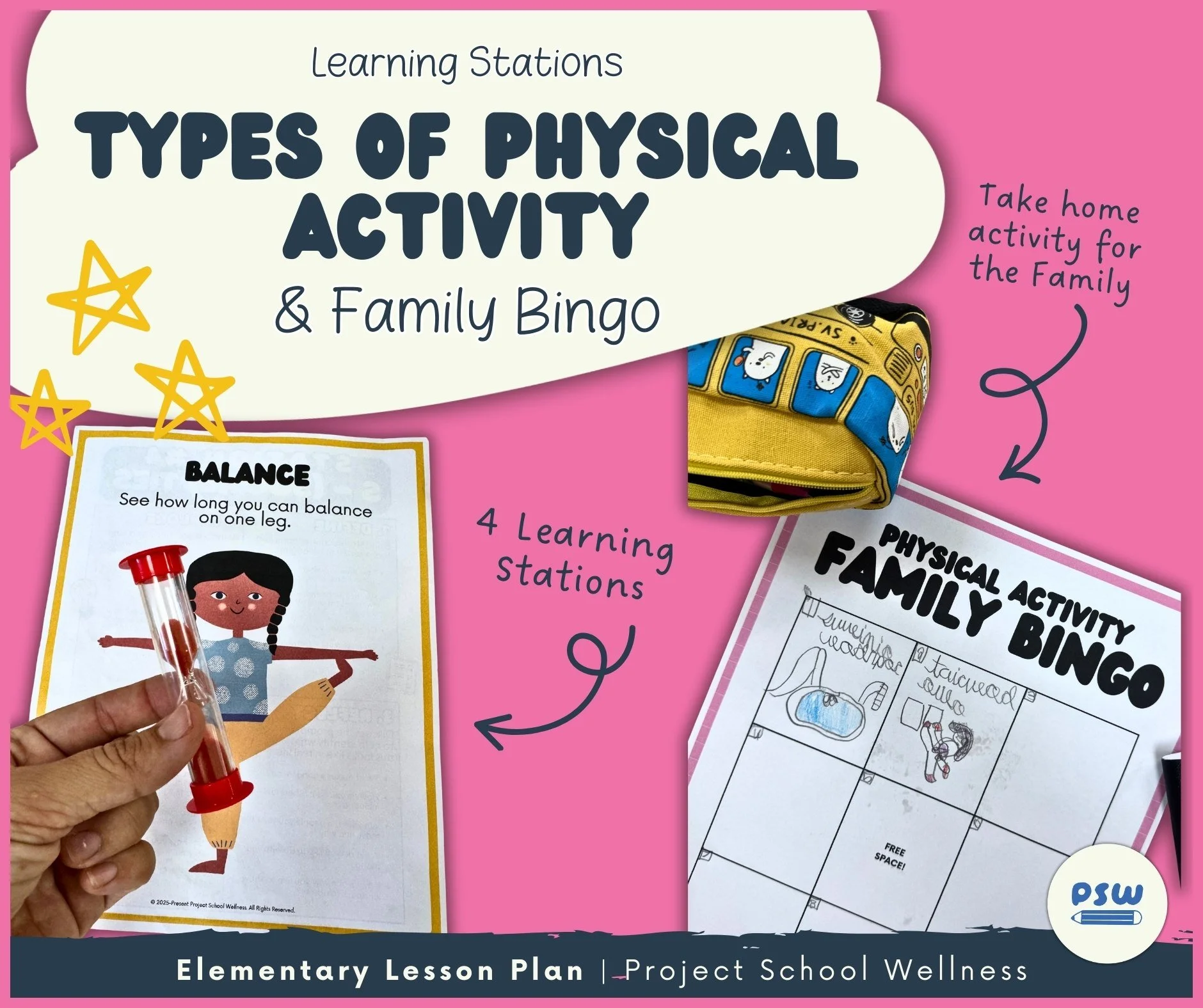
When it comes to teaching students how to care for their bodies, physical activity is fundamental. These interactive fitness stations introduce students to four different types of physical activity:
Flexibility - Helps your body bend, stretch, and move easily.
Strength - Helps your muscles and bones get stronger so you can lift, push, or carry things.
Balance - Helps you stay steady and not fall over when you move.
Cardio (Aerobic) - Helps your heart and lungs work better.
Each type of fitness plays a key role in strengthening our bodies and enabling us to physically move through the world. And this station activity is a great way to teach the differences to students.
How Do the Types of Fitness Learning Stations Work?
This activity features four stations, each connects to a different type of fitness. At each station, students engage in hands-on exploration and movement to better understand the fitness classification. After they’ve completed each station and have a better understanding, they created a physical activity bingo card to take home. The stations make learning tactile. They feel hamstrings stretch, notice heart rate rise, wobble into balance, and control strength with good form. It’s an inquiry, not just an activity. Even my reluctant movers found something they could do well!
What’s Included?
Four learning station posters: flexibility, strength, balance, and cardio.
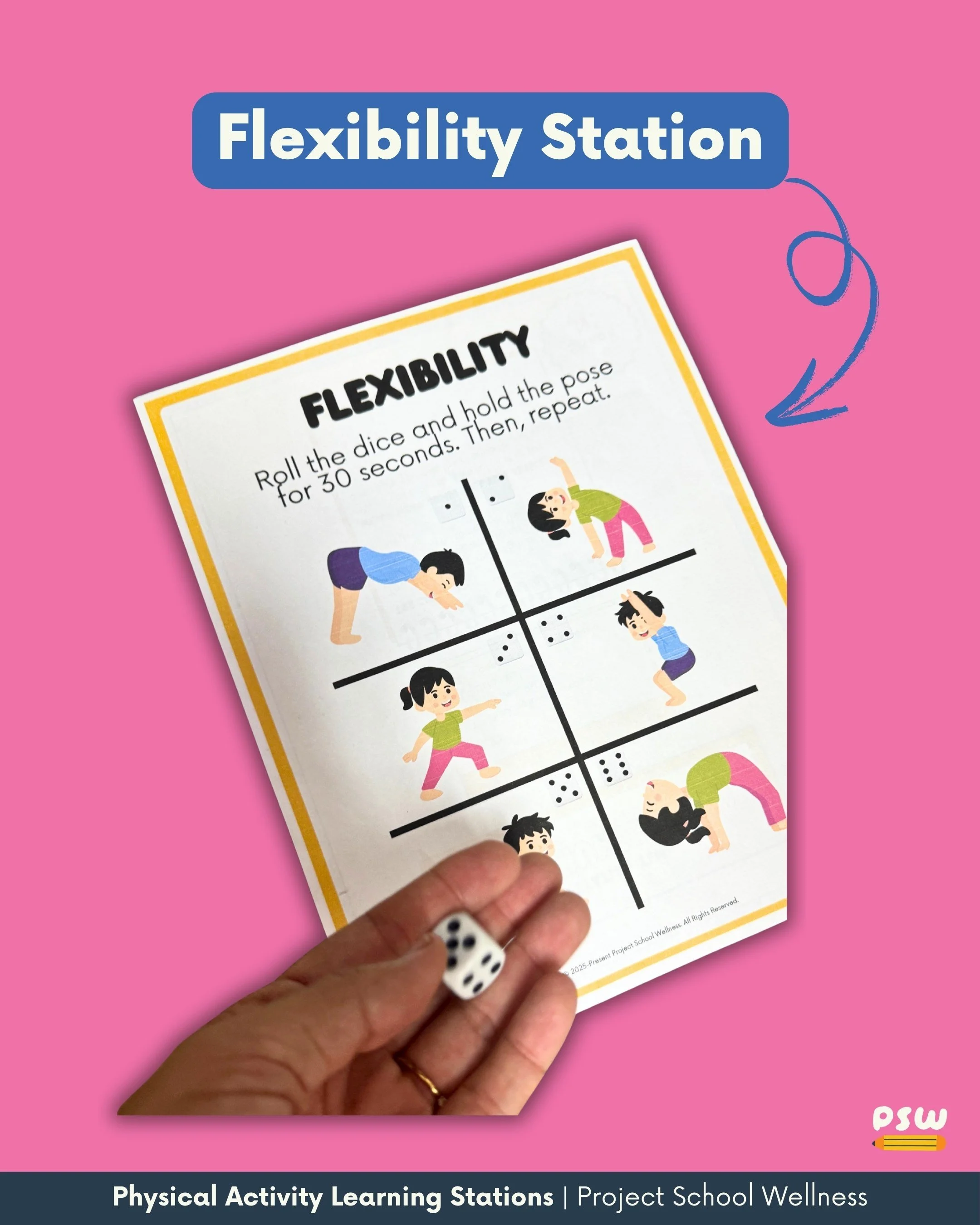
Blank Physical Activity Bingo Card template for take-home goal setting.
Classroom setup, activity directions, and brainstorming ideas.
How to Use It in Your Classroom
Before completing the stations, introduce students to the four different types of physical activity: flexibility, strength, balance, and cardio. Then, divide students into groups and assign them a station. Once at their first station, set a timer for a few minutes. When the timer goes off, direct students to rotate. I set the timer, stepped back, and let them explore.
Bonus Assignment: Physical Activity Bingo Card
Once students have completed each station, they created a physical activity bingo card to take home. Before they started creating, I gave them a few requirements to help it actually be a meaningful activity:
Write out activities, not exercises (i.e. do a yoga video with the family vs. do 25 pushups).
Include each type of physical activity at least once.
Be realistic about what you and your family like to do.
It may also be help to start by brainstorming a list of potential activities, things like “dance to two songs,” “hold a 20-second plank,” or “walk the dog for 10 minutes.” Instant goal-setting without the pressure. They left class with a personalized plan, excited to include their family in completing their Bingo card!

After students complete their Bingo cards, take a moment to debrief and reflect together. Review the four types of physical activity and invite students to share examples of how they already practice each one in their daily lives.